Digital transformation
We move a company’s operations onto connected software step by step: manual work and spreadsheets replaced, legacy systems modernised, existing tools joined up and data put to use.
In many companies the real system is a mix of old software, spreadsheets, email and people who remember how things work. It holds up until the business grows, someone leaves or a customer asks for something faster. Replacing everything at once is risky and rarely needed. We work in steps. We map how the operation runs today, start where the gain is largest, and release each change before the next one begins. Manual steps become software, old systems move to a modern platform, what you already run gets connected, and the data starts to inform decisions.
Map your first stepWhat you get
A map of how work flows
A clear picture of your processes, systems and data today, with the costly gaps marked.
Manual steps automated
Tasks now done by hand or in spreadsheets moved into software that does them the same way every time.
Legacy systems modernised
Old systems moved to a supported platform, with the data carried across and checked.
Systems that talk to each other
Integrations that pass data between your tools, so each fact lives in one place.
Data for decisions
Reports and dashboards drawn from live data, so managers decide from figures instead of guesses.
How it works
- 01
Map the operation
We follow how work, data and decisions move through the company today.
- 02
Choose the first step
We pick the change with the largest gain for the least disruption, and plan it in detail.
- 03
Build, release, measure
We deliver that step, put it into daily use and check the gain before moving on.
- 04
Repeat and connect
Each next step builds on the last, until your systems work as one.
Related case studies
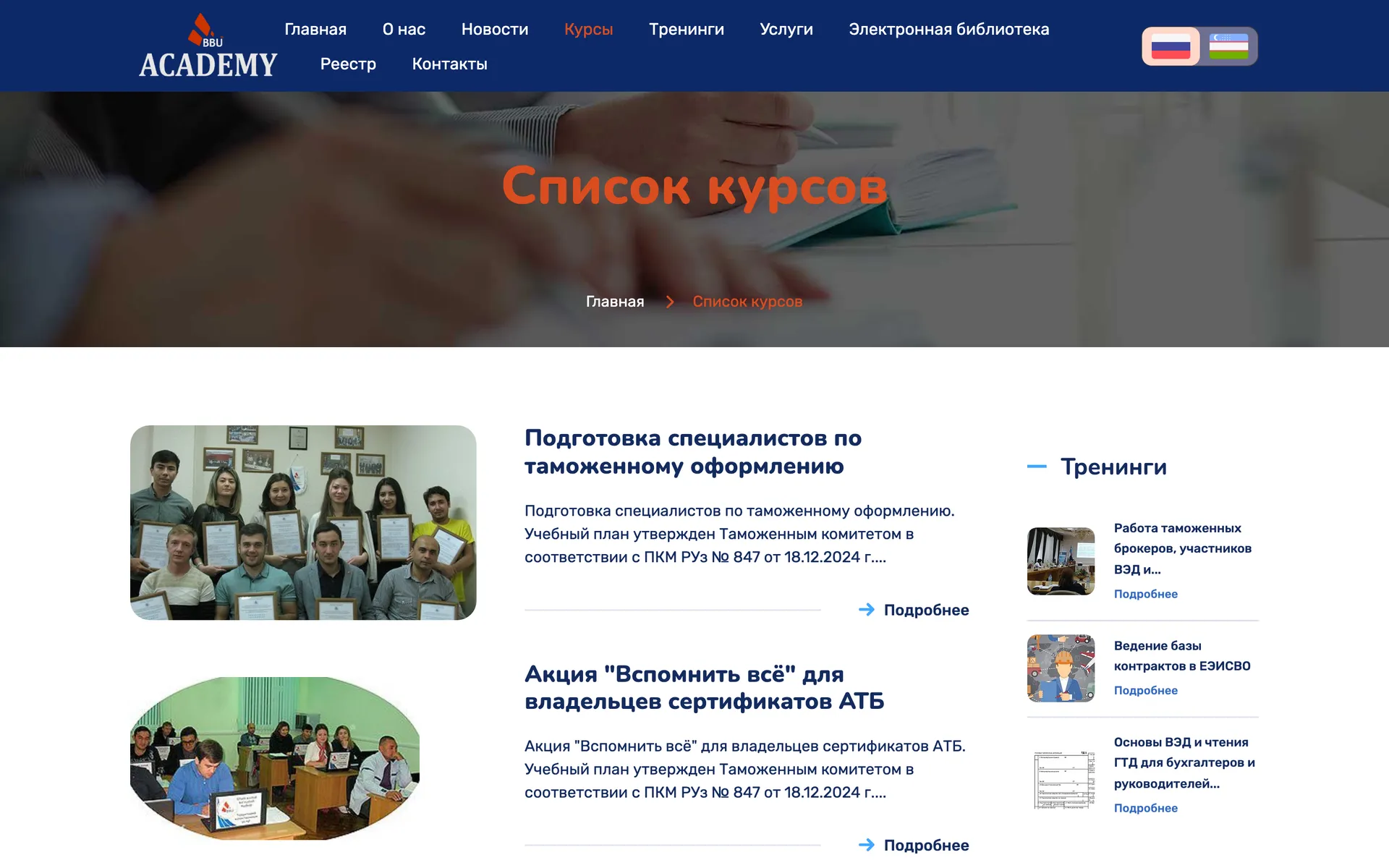
Professional training · Customs
A training centre’s site, courses and tests under one admin panel
Let the centre’s staff run every section of their site without a developer, move its surveys and tests to a new engine without losing past results, and keep the site in step with the association’s in two languages.
In development: managed sections, a new testing engine, two languages.
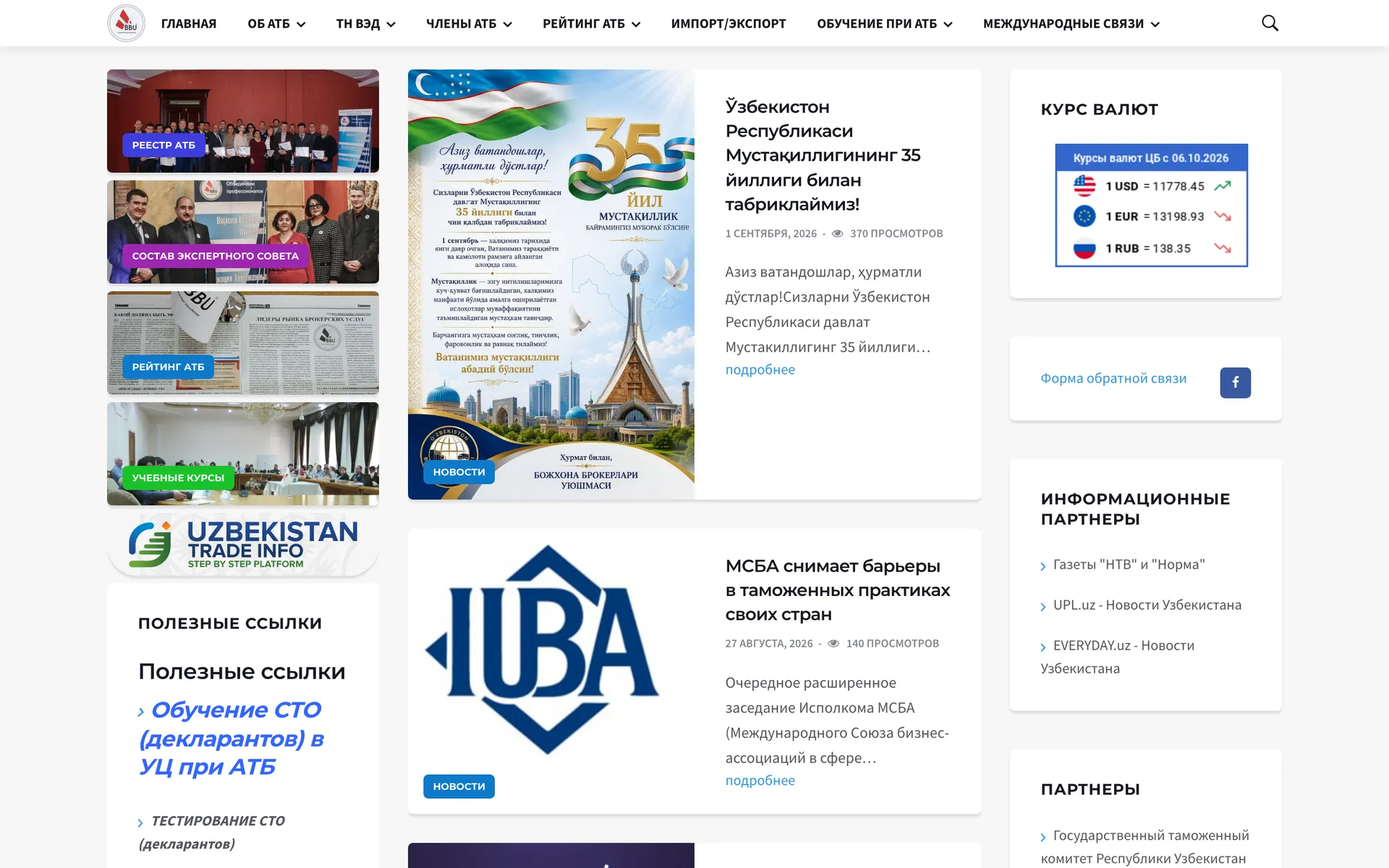
Customs brokerage · Association
One platform for Uzbekistan’s Association of Customs Brokers
Move the association’s site to a new platform without losing its archive, run the training centre’s site from the same admin panel, and let anyone check that a certificate or letter from the association is genuine.
In development: public site, admin panel, certificates and letters.
Other services in this group
Expanders
Several ways to work with us
Pick the shape that fits. We’ll adjust it as the product grows.
Project
One system, fixed scope
- Fixed scope, fixed deadline
- Led by a senior engineer
- Full code ownership
- Direct communication
Partner
Ongoing engineering capacity
- Dedicated engineering time
- Architecture through production
- Monthly scope reviews
- Priority response
Complex systems
Architecture-first engagements
- Migration and scaling
- AI automation built in
- Senior architecture review
- We own the hard parts
Have questions?
Answers to what we are asked most before a project starts.
What is custom software development?
It is building software around one business and its customers, rather than bending an off-the-shelf product to fit. The work runs from deciding what to build, through design, engineering and testing, to release and the upkeep after it. The result does what your business needs, in the way it works.
What are the common ways to hire developers?
There are three main ones. An in-house team gives the most control, but it takes months to hire and costs the most to keep. Freelancers start quickly, but someone has to lead them and join up their work. A studio brings a complete team of analysts, designers and engineers who already work together, and it grows or shrinks with the project.
How can I start a digital business?
Start with the problem, not the software. Talk to the people you want to serve and check that they would pay for a solution. Test the idea as cheaply as you can: sometimes a landing page with a waiting list is enough. Then build the smallest product that proves the idea, release it, and let what real users do decide what comes next.
What is digital transformation for enterprises?
It is changing how a company works so that software carries more of the load: connected systems in place of manual steps and scattered spreadsheets, old software moved to a modern platform, and decisions made from data. It works best in steps, starting where the gain is largest, with each step released and measured before the next.
What are you building?
Tell us about your project. We’ll get back to you to talk through scope, timeline and first steps.
Want to talk sooner?
Book a quick call